
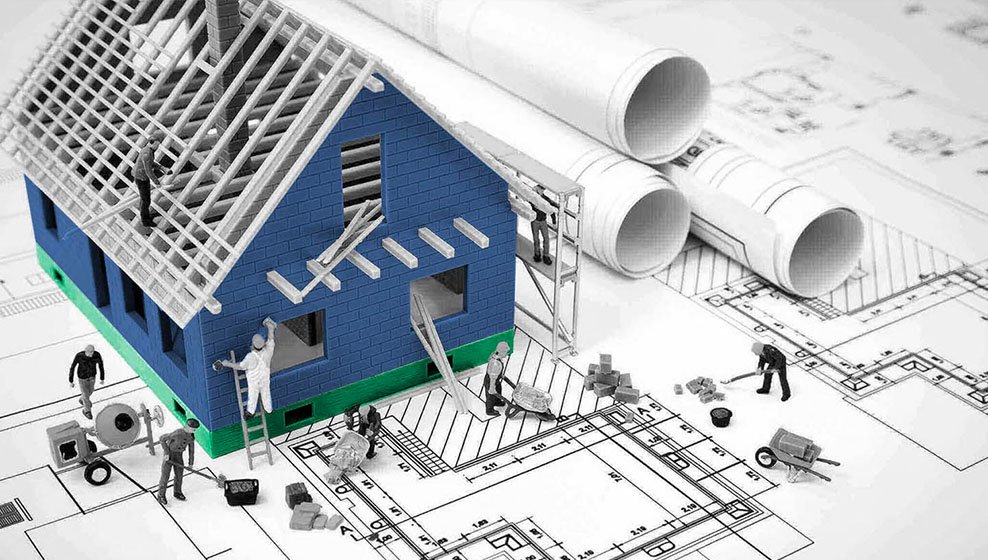
Building from the ground up is the highest-margin play in real estate, and the highest-risk. You’re not buying value — you’re creating it, from dirt.
The financing reflects that. Ground-up construction loans work differently from every other product an investor uses, and misunderstanding the mechanics is expensive.
What a Construction Loan Is
A ground-up construction loan finances the building of a new structure on land — either land you already own or are buying as part of the deal. Its defining traits:
- Funds released in draws tied to construction milestones, not lump sum
- Interest-only during the build, on funds actually drawn
- Sized against completed value and cost, not current value — there’s nothing there yet
- Short term, typically 12 to 24 months, matching the build timeline
Because the collateral doesn’t exist when the loan closes, underwriting leans heavily on your experience, your plans, your budget, and the projected value of the finished project.
A Full Project, By the Numbers
Land at $300,000, construction budget of $700,000, for a $1,000,000 total project cost. At 25% down, that’s $250,000 in, a $750,000 loan, at 75% loan-to-cost.
What the interest actually costs
At 9.99% interest-only, the full $750,000 would run $6,243.75 a month. Over an 18-month build, that’s about $112,000 if the entire loan were outstanding the whole time.
But it isn’t. Construction funds release in draws as the build progresses, and you only pay interest on what’s been drawn. Early on, little is outstanding. The balance climbs as the project rises. Across a typical build, average outstanding might run 55% of the loan — putting realistic interest closer to $62,000.
Any calculator charging interest on the full loan from day one overstates your cost. Real construction interest is meaningfully lower, and understanding this changes your project’s actual return.
The equity a build creates
If that $1,000,000 project appraises at $1,350,000 on completion, you’ve created $350,000 in value — the developer’s premium for taking on the build risk. That’s the reward for the complexity, and it’s why experienced investors move from flipping into building.
The Draw Schedule
Construction draws follow the build. A typical sequence:
- Land / lot — often funded at closing
- Foundation — site work, footings, slab
- Framing — structure and roof
- Dry-in — windows, exterior, roofing complete
- Mechanicals — plumbing, electrical, HVAC rough-in
- Interior — drywall, cabinets, fixtures
- Final — finishes, certificate of occupancy
Each draw releases after an inspection confirms the milestone is complete. On a strong program, funding follows inspection by 24 to 48 hours. The mechanics mirror rehab draws, scaled up — we cover them in how draw schedules work.
The Working Capital Reality
Same trap as rehab loans, larger stakes: you front each phase, then get reimbursed.
Contractors need deposits. Materials get purchased before installation. On a million-dollar build, the sums you’re floating between draws are substantial. Undercapitalized builders stall mid-project — the single most common way construction deals fail.
Plan liquidity well beyond your down payment. The gap between completing a milestone and receiving its draw is where projects die.
LTC vs LTV in Construction
Two limits govern how much you can borrow, and construction lenders apply both:
- Loan-to-Cost (LTC) — the loan as a percentage of total project cost (land plus construction). Often capped around 75%.
- Loan-to-Value (LTV) — the loan as a percentage of the completed appraised value.
The lender uses whichever produces the smaller loan. We break this down fully in LTC vs LTV — it’s the concept construction borrowers most often misjudge.
What Lenders Require
Construction is the most experience-sensitive product in investment lending. Expect scrutiny of:
- Track record. Completed projects matter here more than anywhere. Many programs want two or more.
- Detailed plans and permits. Approved architectural plans, and permits in hand or clearly in process.
- A line-item budget. Realistic, contractor-backed, with contingency built in.
- Your builder. A licensed general contractor with a record, unless you’re a qualified builder yourself.
- A timeline. A construction schedule the lender can measure draws against.
- Strong credit. Construction typically requires higher scores than acquisition loans.
What Goes Wrong
- Cost overruns. Construction budgets overrun more than any other type. Build in 10–15% contingency, minimum, and treat it as spent.
- Timeline slippage. Weather, permits, inspections, labor, materials — every delay adds interest and pushes your exit.
- Permit delays. The most underestimated line in the schedule, routinely.
- Undercapitalization. Running out of working capital between draws halts everything.
- An optimistic completed value. The entire model rests on the finished appraisal. If it comes in low, your margin evaporates.
Your Exit
A construction loan is short-term. Plan the exit before you break ground:
- Sell the finished property. Repay from sale proceeds. The build-to-sell model.
- Refinance into permanent financing. Keep it as a rental by refinancing into a DSCR loan on the completed, income-producing property. The build-to-rent model.
Both are sound. What’s not sound is reaching completion without knowing which one you’re executing.
Model Your Build
Run the full project — land, construction budget, down payment, and interest across the build timeline. Our ground-up construction calculator handles project cost, financing, LTV, and total interest.
Remember that its interest figure assumes the full loan is outstanding, so your real interest — paid only on drawn funds — will come in lower. When your plans and budget are ready, apply now.
All figures are illustrative and vary by lender, project, and market. Construction carries substantial risk of cost overruns, delays, and value shortfalls. LTC and LTV limits, draw structures, and experience requirements differ between lenders. Nothing here is a commitment to lend or financial, tax, or legal advice.